Hot-chamber · Vertical · Cold-chamber

Die casting machines,
38 to 1600 tonnes, built to your part.

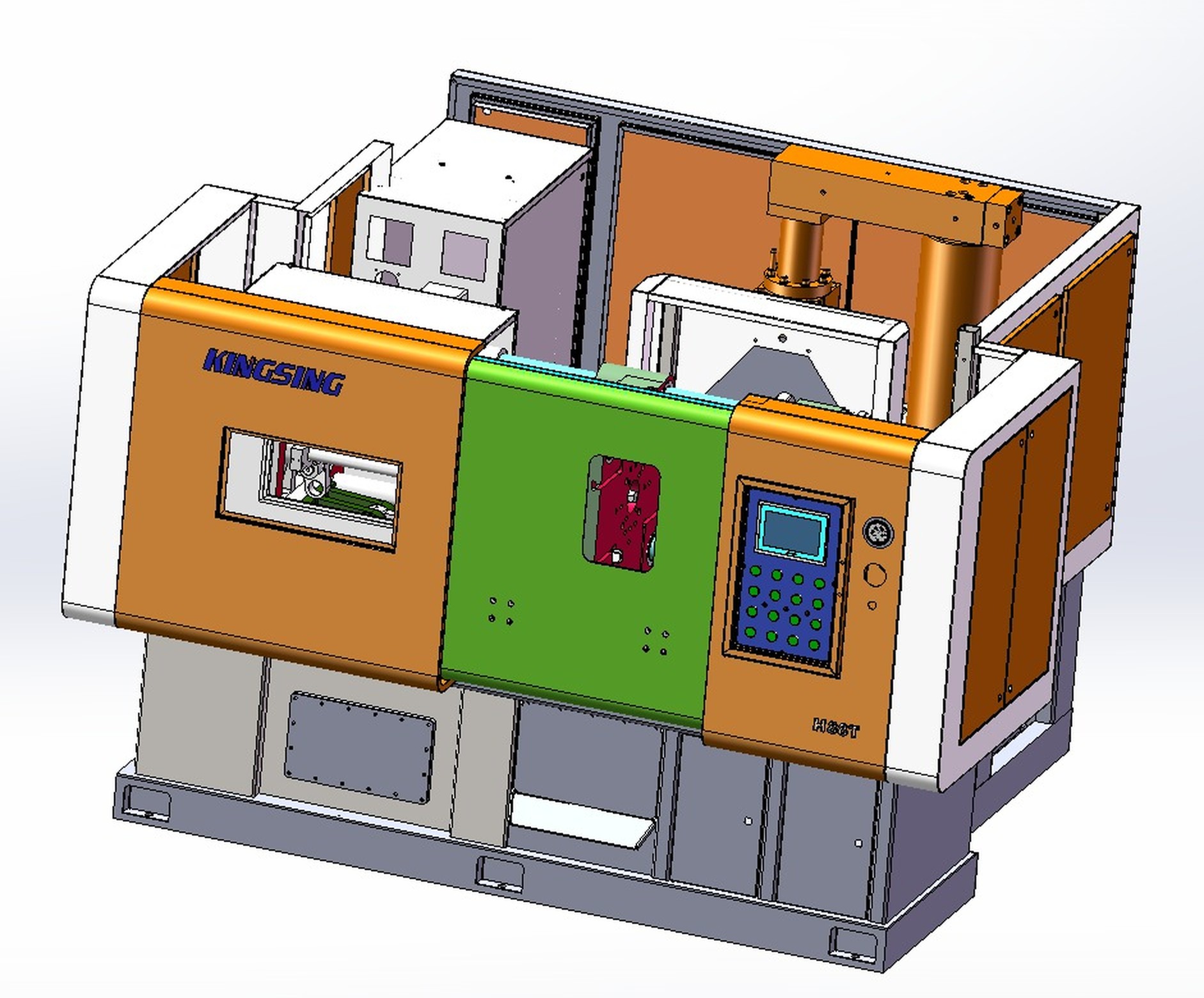
We build three families of die casting machines in Dongguan, China: compact hot-chamber machines for zinc and magnesium, vertical machines for insert moulding, and cold-chamber machines for aluminium. Everything is built to order — tell us the part, and we size the machine.

Horizontal hot-chamber die casting machine
2010Established in Dongguan
38–1600 TClamping force range
3Machine families
2Auxiliary lines: take-out & ladle

Three families, one rule: the alloy decides the machine

Below 650 °C the shot chamber can sit in the melt. Above it, it cannot — which is why aluminium goes to a cold-chamber machine and zinc goes to a hot-chamber machine. The third family, vertical, exists for parts with inserts.

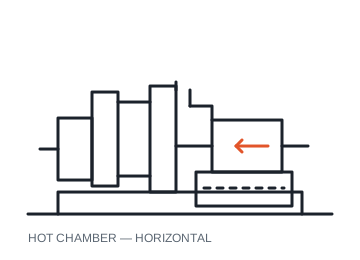
Hot-chamber machine schematic

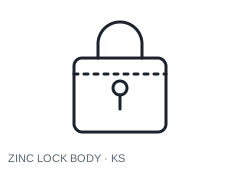
Hot chamber

KS series · 38–88 T

Fast cycles for zinc and magnesium. The shot chamber is immersed in the melt, so filling happens in one movement — 10 to 30 seconds a cycle on small parts.

  • Locks, zipper sliders, hardware
  • Shielding cans, small connectors
KS series details
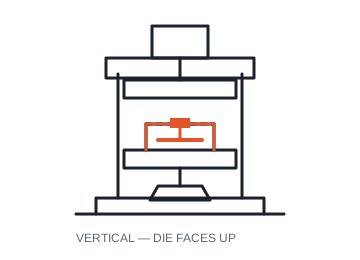
Vertical machine schematic

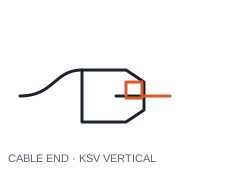
Vertical

KSV series · 130–400 T

Dies sit horizontally, cavity facing up, so inserts can be placed before the die closes. This is the only configuration that does that reliably.

  • Brake cables, hooks, wire assemblies
  • Copper busbar inserts, rotors
KSV series details
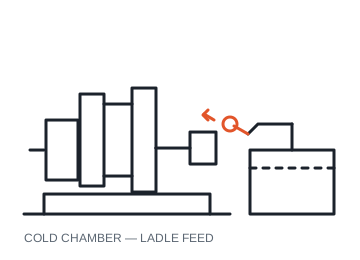
Cold-chamber machine schematic

Cold chamber

KSC series · 130–1600 T

Independent melting furnace and a ladle deliver metal to the shot sleeve. Built for aluminium, magnesium and copper at high injection pressure.

  • Automotive and communication housings
  • Structural and engineering parts
KSC series details

Not sure which tonnage you need?

Send the part drawing — or use the calculator. Enter the projected area and the alloy, and you get the clamping force and the smallest machine in our range that covers it.

The calculation uses the standard industry formula: clamping force = projected area × specific pressure × safety factor. It gives you a starting point for a quotation, not a substitute for a die design review.

Die casting machine

How we work with a new customer

01

Part first, machine second

We size from the part: alloy, projected area, wall thickness, inserts, cycle target. The machine follows from that, not the other way round.

02

Configuration, then price

Platen size, shot position, furnace type, control level, take-out and ladle — priced as separate lines so you can see what you are paying for.

03

Built to order

Machines are manufactured after the order is confirmed. Typical lead time and the current production slot are confirmed on the quotation.

04

Commissioning support

Installation drawings, commissioning guidance and operator training. For a first machine we can arrange an engineer on site — agreed per order.

Parts we build machines for

The alloy decides the family; the insert decides whether it has to be vertical.

Tell us the part. We will size the machine.

Send a drawing, a sample photo or just the alloy and the projected area. You will get a model recommendation and a configuration list, usually within two working days.